|
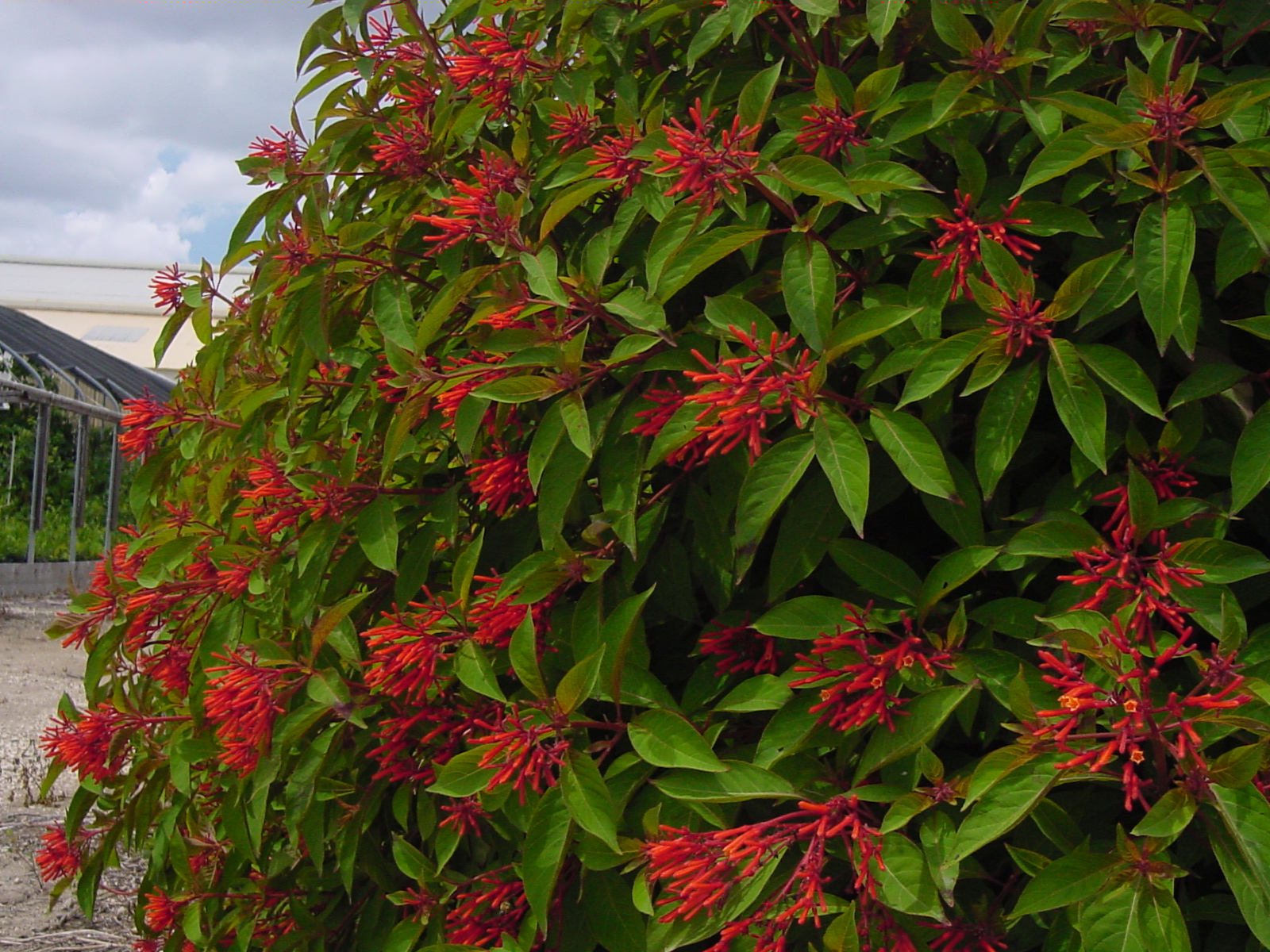
Firebush (Hamelia patens)
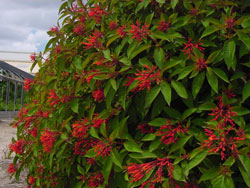

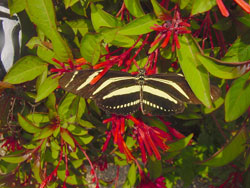
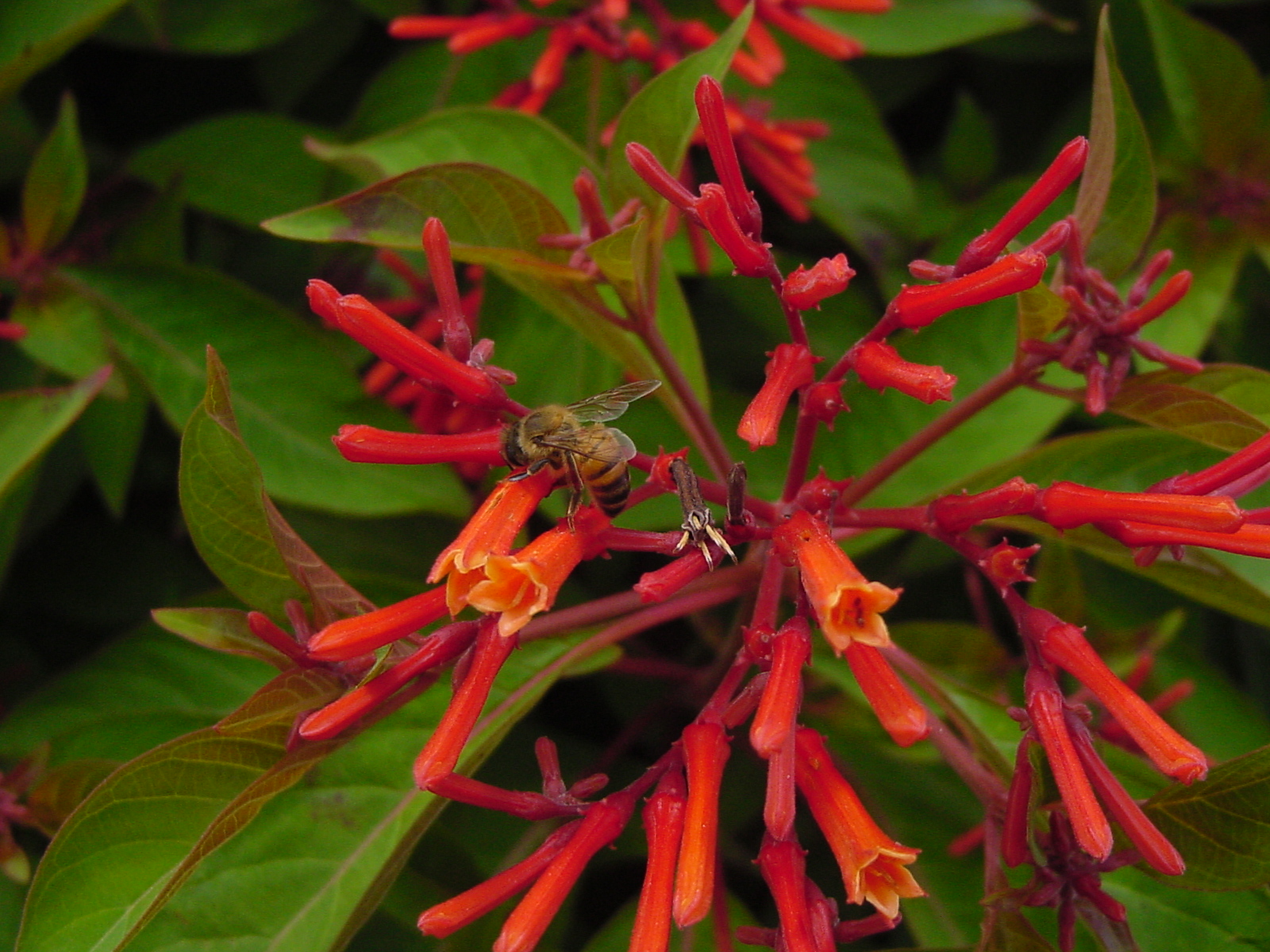
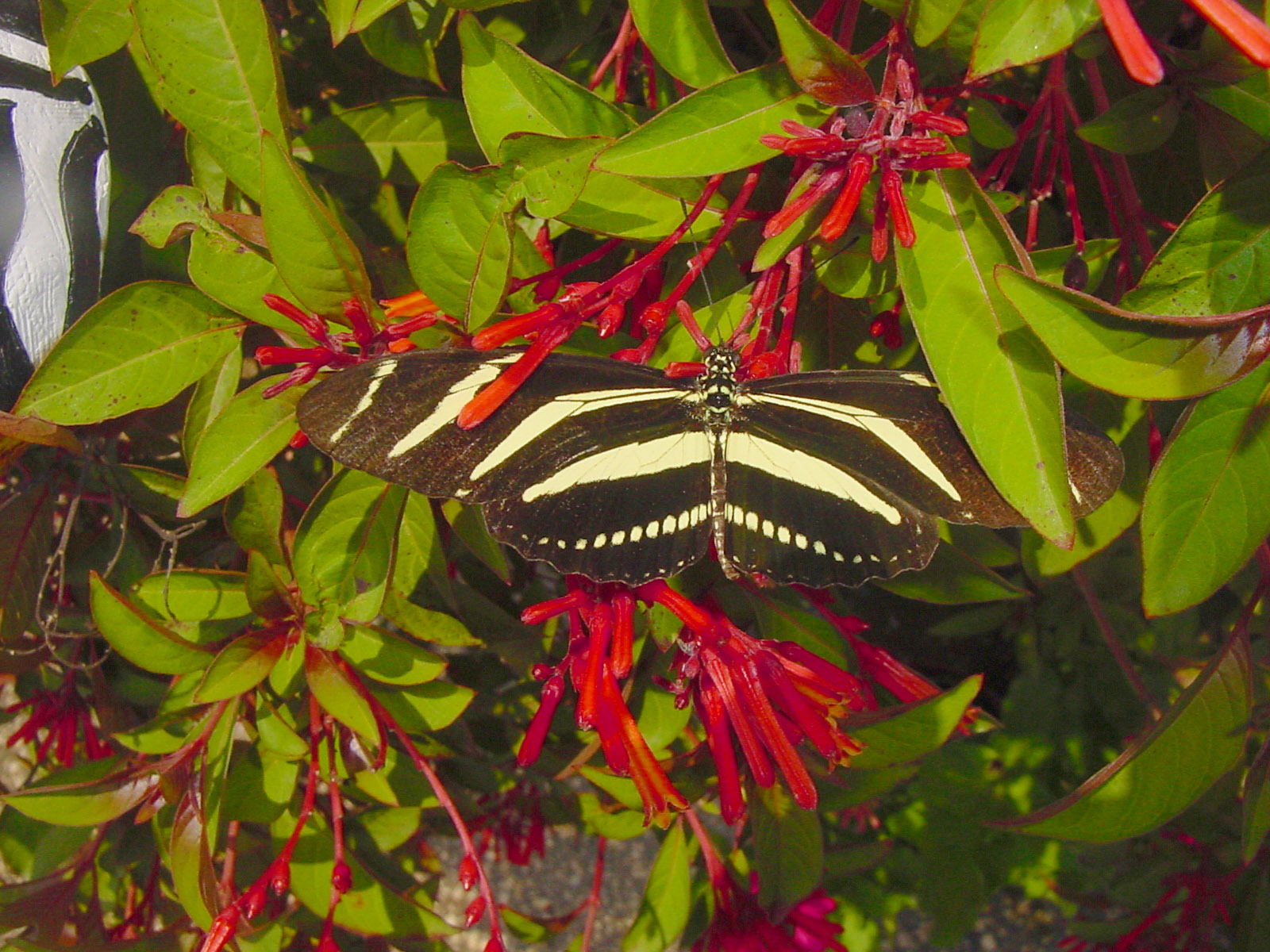
Firebush (Hamelia patens) produces the favorite hummingbird bloom in most landscapes. The toughest bird in the neighborhood takes possession of the firebush. The shrub reaches 4 feet high and is just as wide. The shrub is covered by small, red, tubular flowers. Use it in a container to draw the hummingbirds onto the patio. Placing it in a 3-gallon container limits the size to about 3 feet tall and wide. Firebush is another heat loving xeriscape plant for full sun that is a root hardy perennial.
Few plants really thrive in our Texas heat from July- September but Hamelia patens (sometimes listed as H. erecta) seems to thrive on it. Actually, a large shrub or small tree native to Mexico, firebush is a dependable and useful perennial for the southern half of Texas. It freezes to the ground and re-sprouts each spring typically making a 4- to 5- foot mound of reddish orange flowers from early summer until late fall.
In addition to its long blooming season, there are several other significant attributes of the plant. Hamelia is very drought tolerant and thrives in most any soil as long as it is well- drained. Full sun or partially shaded locations are preferable to shady ones which will result in rank growth and little bloom. The foliage often turns bright red before freezing back and the small, dark fruit is edible. In Mexico, a fermented drink is said to be made from the fruit. The leaves and stems have been used for tanning and a concoction from the leaves reportedly is used for various medicinal purposes.
The flower buds last longer than the flowers themselves and appear in great numbers. After maturing, the flowers drop off quickly and the plant requires only occasional shearing to keep it in a nearly perpetual state of bloom.
Another common name for H. patens is Hummingbird Bush. Hummingbirds are attracted to the tubular red flowers and add another value to the plant.
Firebush is useful as a container plant in masses or located at the back of wide border plantings. It is useful an annual in northern parts of the state where more severe winters may kill the root system of the plant.
See: http://plantanswers.com/arcadia_pages/plant_of_the_month/Firebush.htm
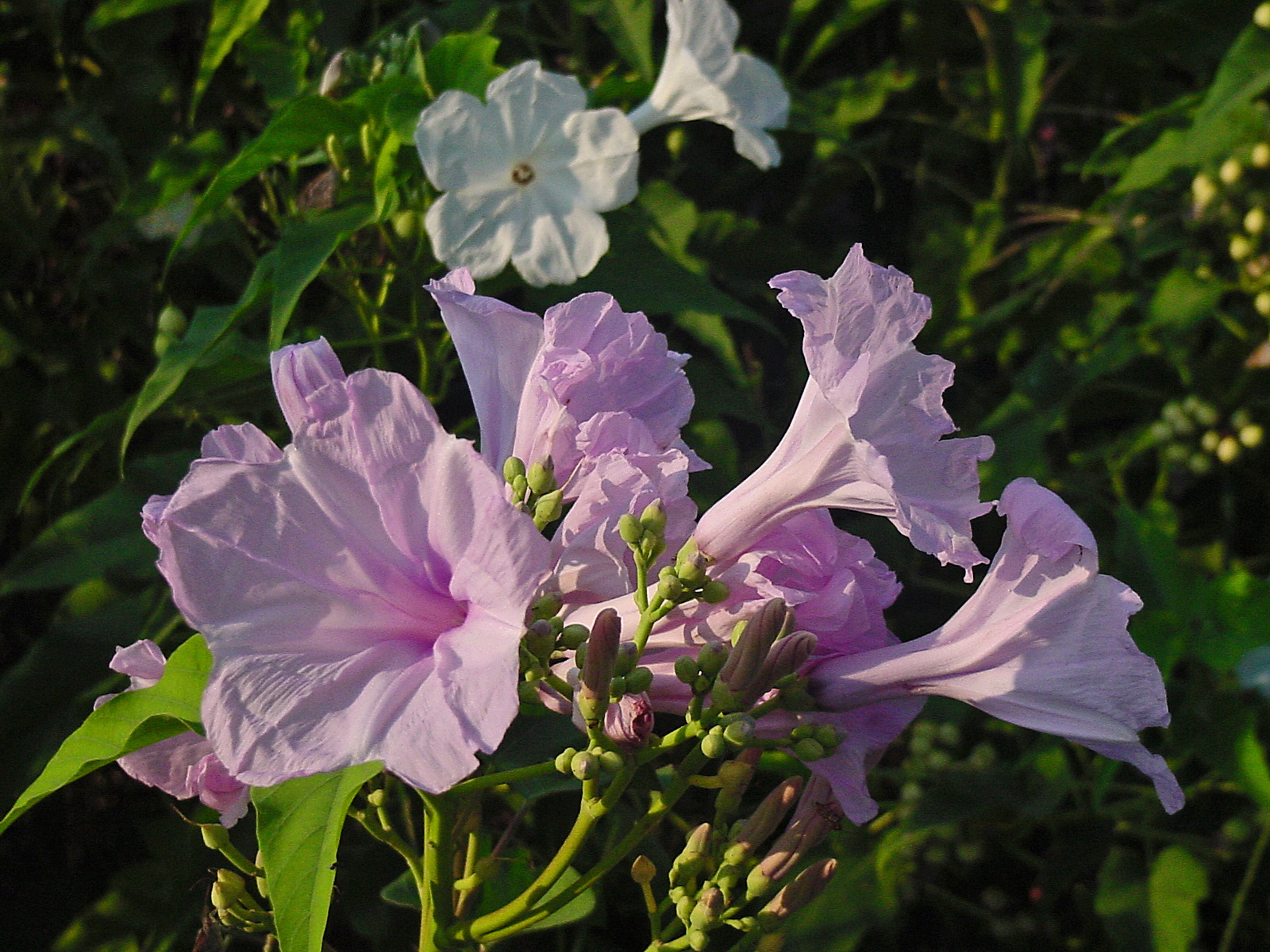
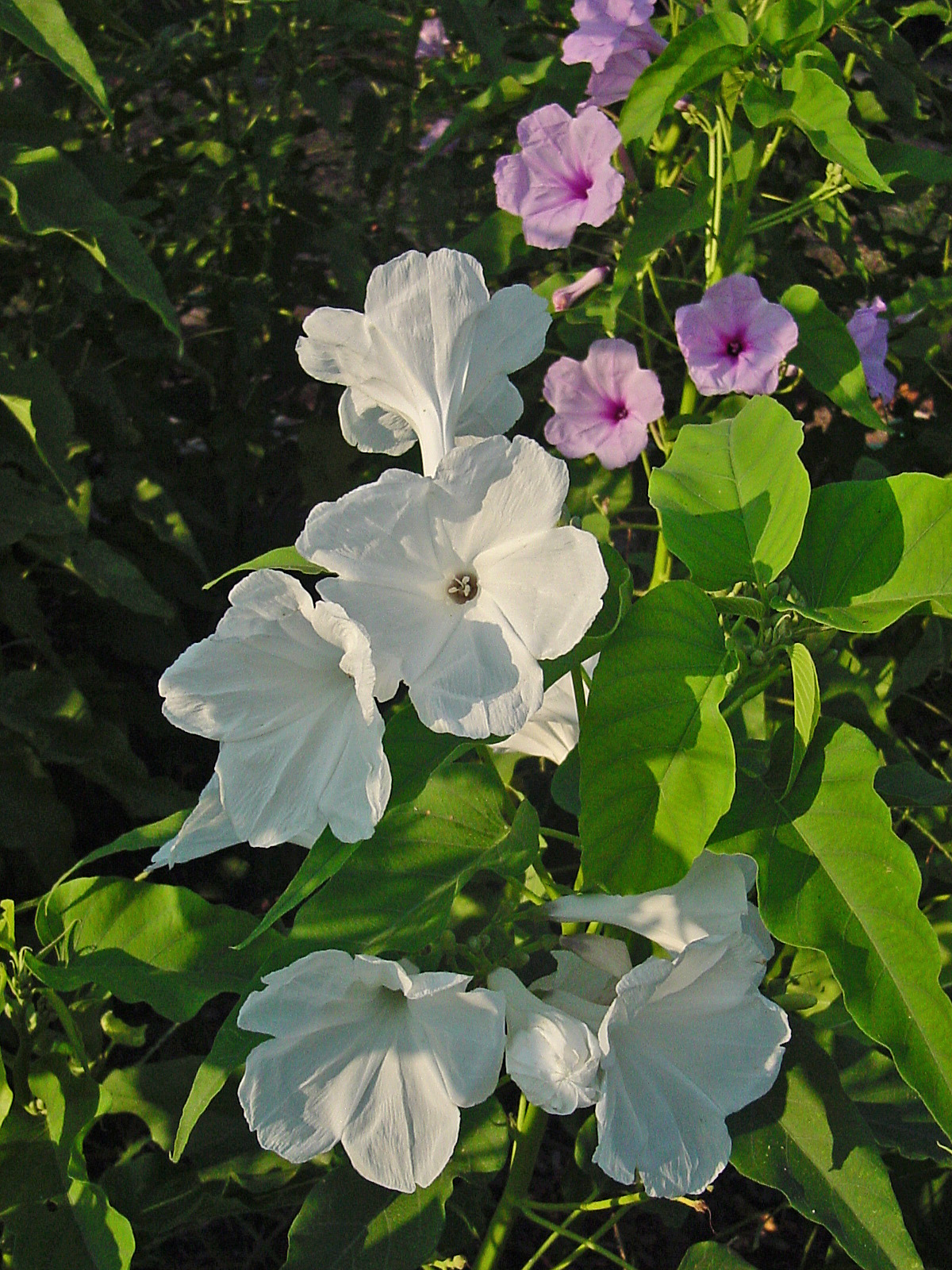
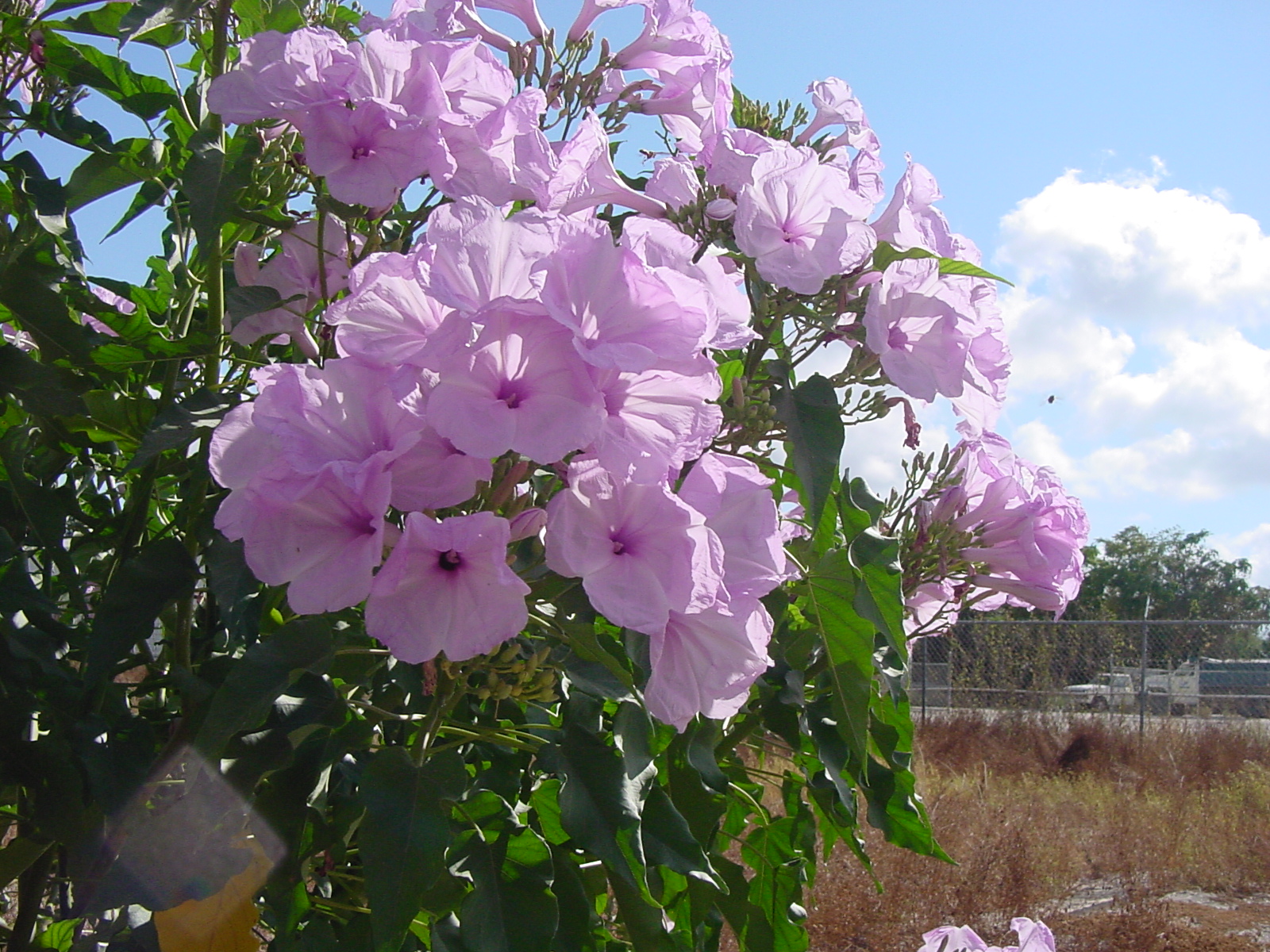
Perennial Bush Morning Glory
AND TRY Perennial Bush Morning Glory
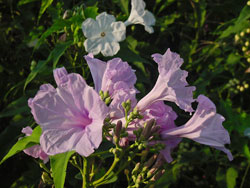
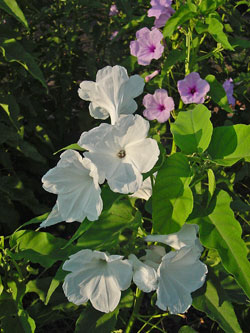
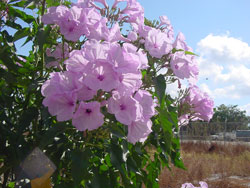
See: http://plantanswers.com/bush_morning_glory.htm
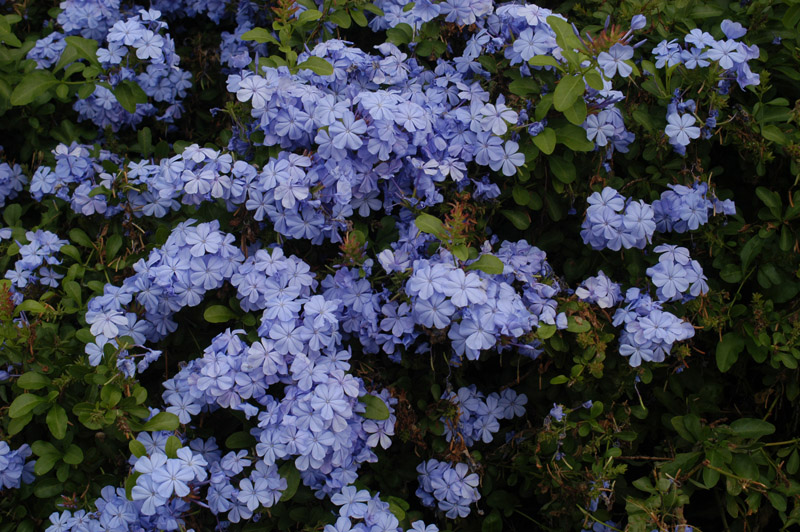
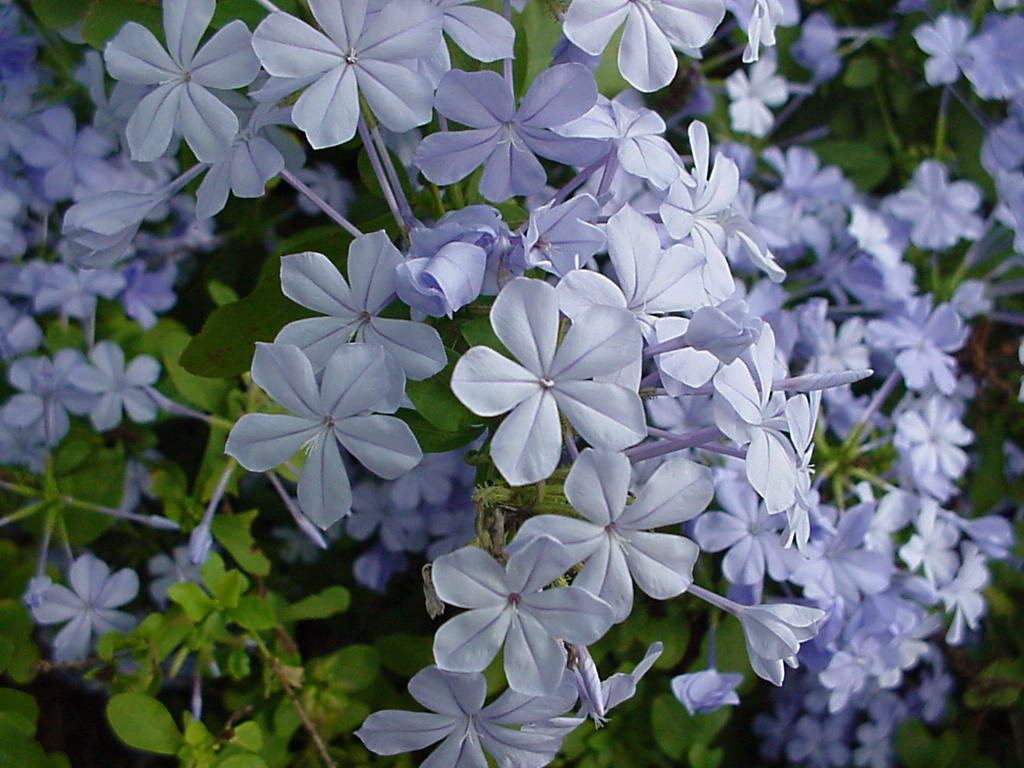
Blue Plumbago
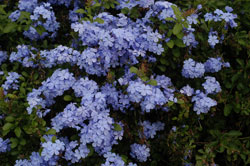
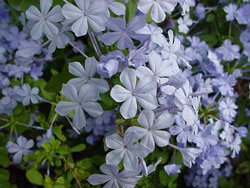

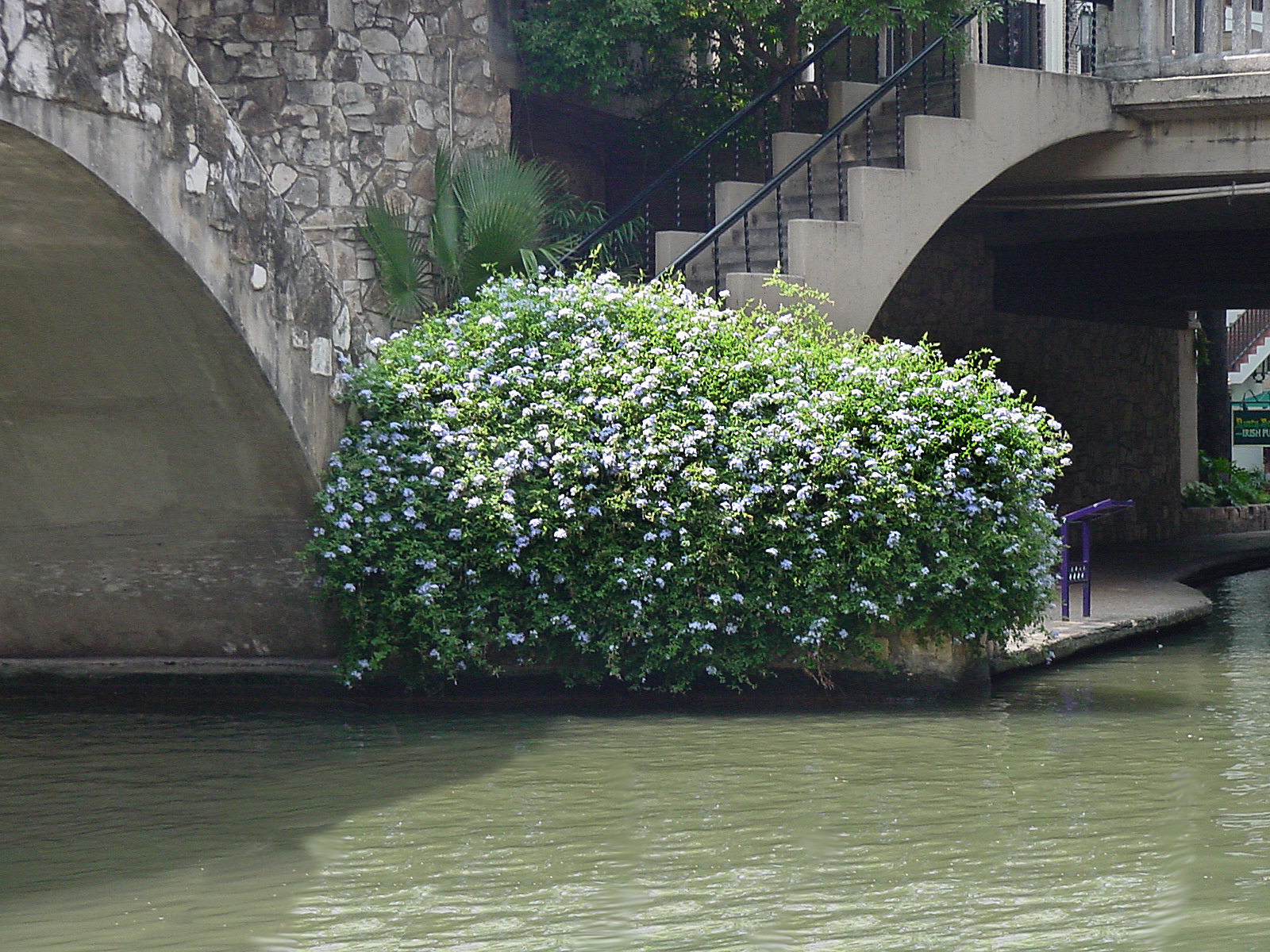
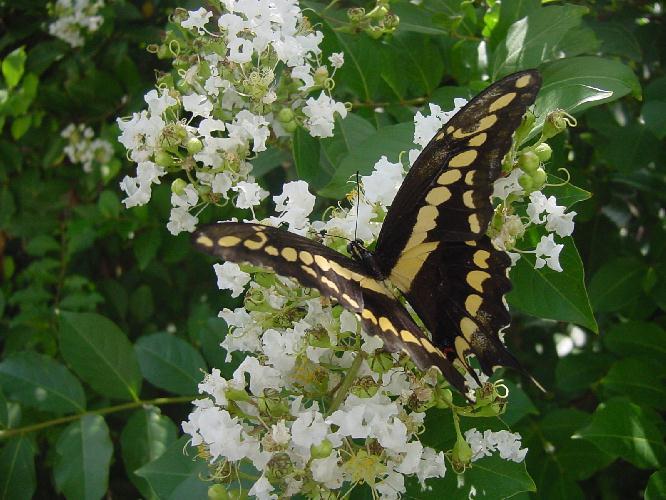
Blue plumbago is a perennial with blue flowers all summer. It performs well in partial shade or full sun. Some winters the foliage is retained and in sheltered locations it may even have a few blooms all winter. Blue plumbago is a good xeriscape plant for summer bloom and is especially attractive to butterflies.
See: http://plantanswers.com/plumbago_best.htm
Crapemyrtles
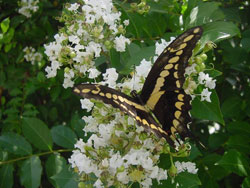
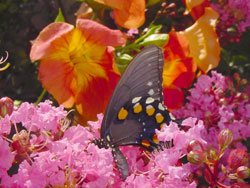
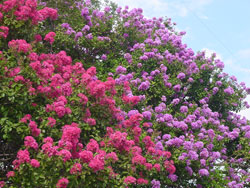
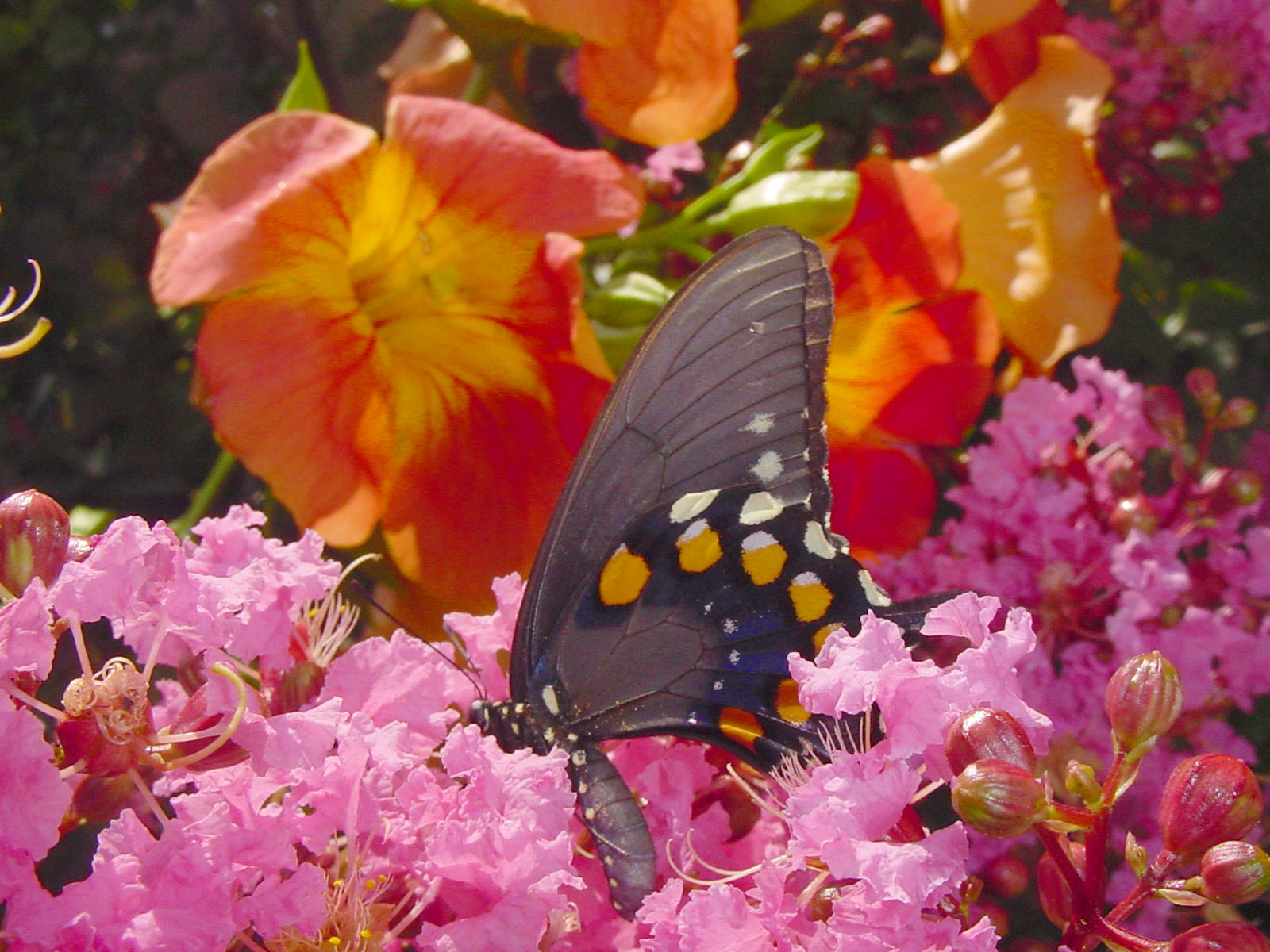
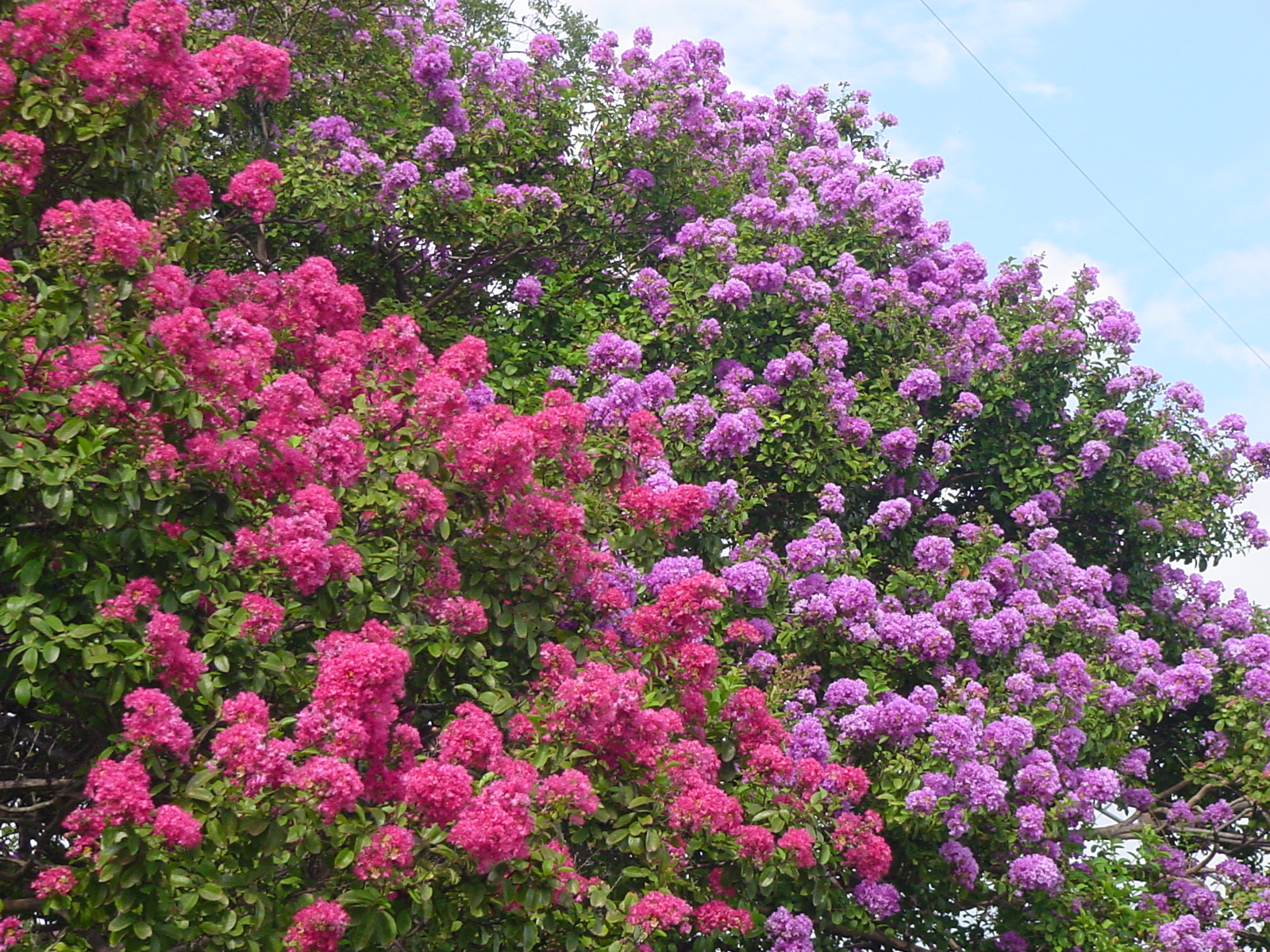
Crapemyrtles are summer blooming woody plants that perform admirably in a xeriscape. Select the size and growth habit to fit your needs. There are small shrubs, large shrubs, and small trees. Bloom color includes white, pink, red, and purple. Crapemyrtle is most renowned for its summer bloom but many of the tree and large shrub selections also have decorative bark. Chose from our list of the best at:
http://plantanswers.com/trees/crapemyrtle/
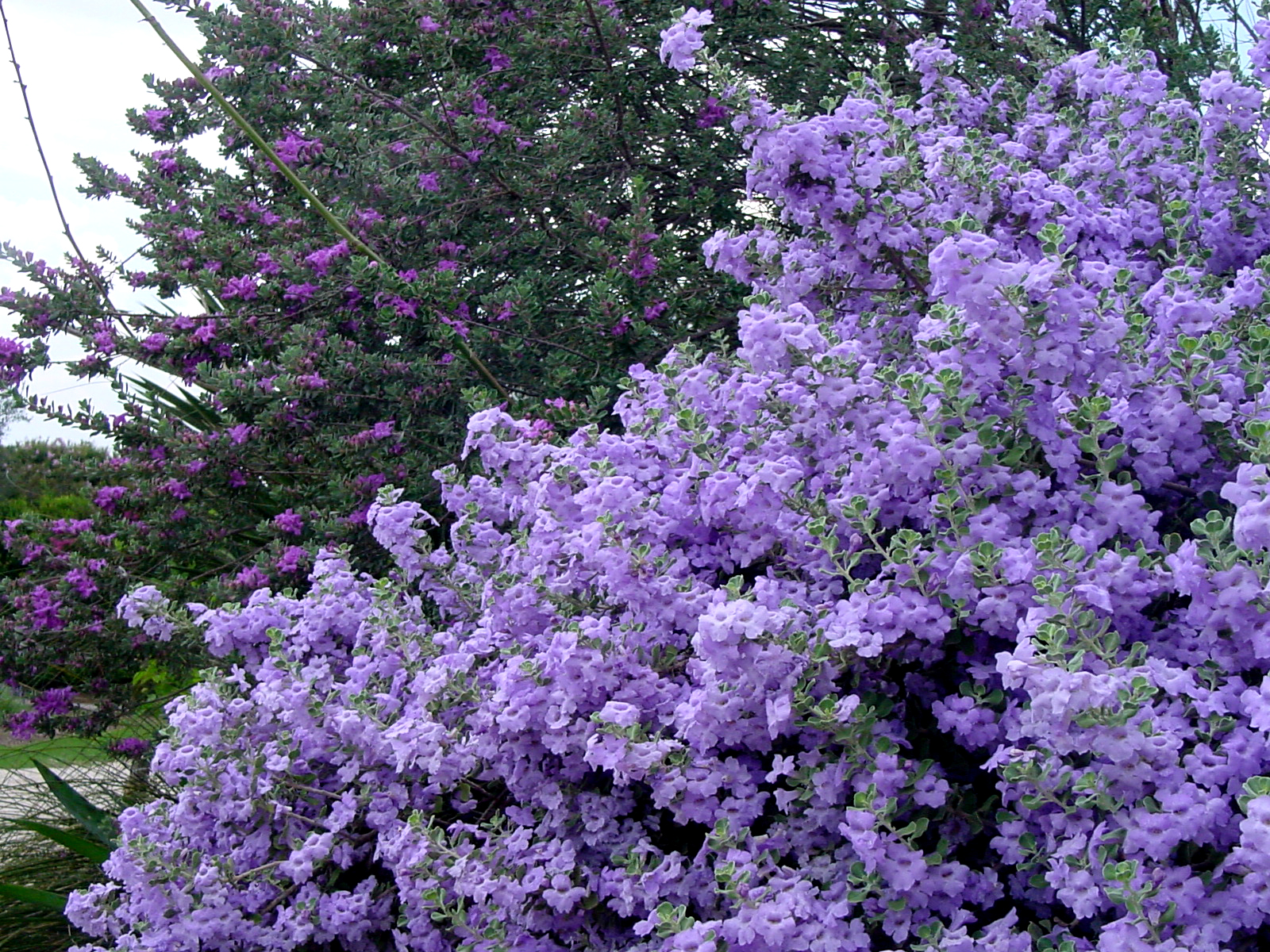
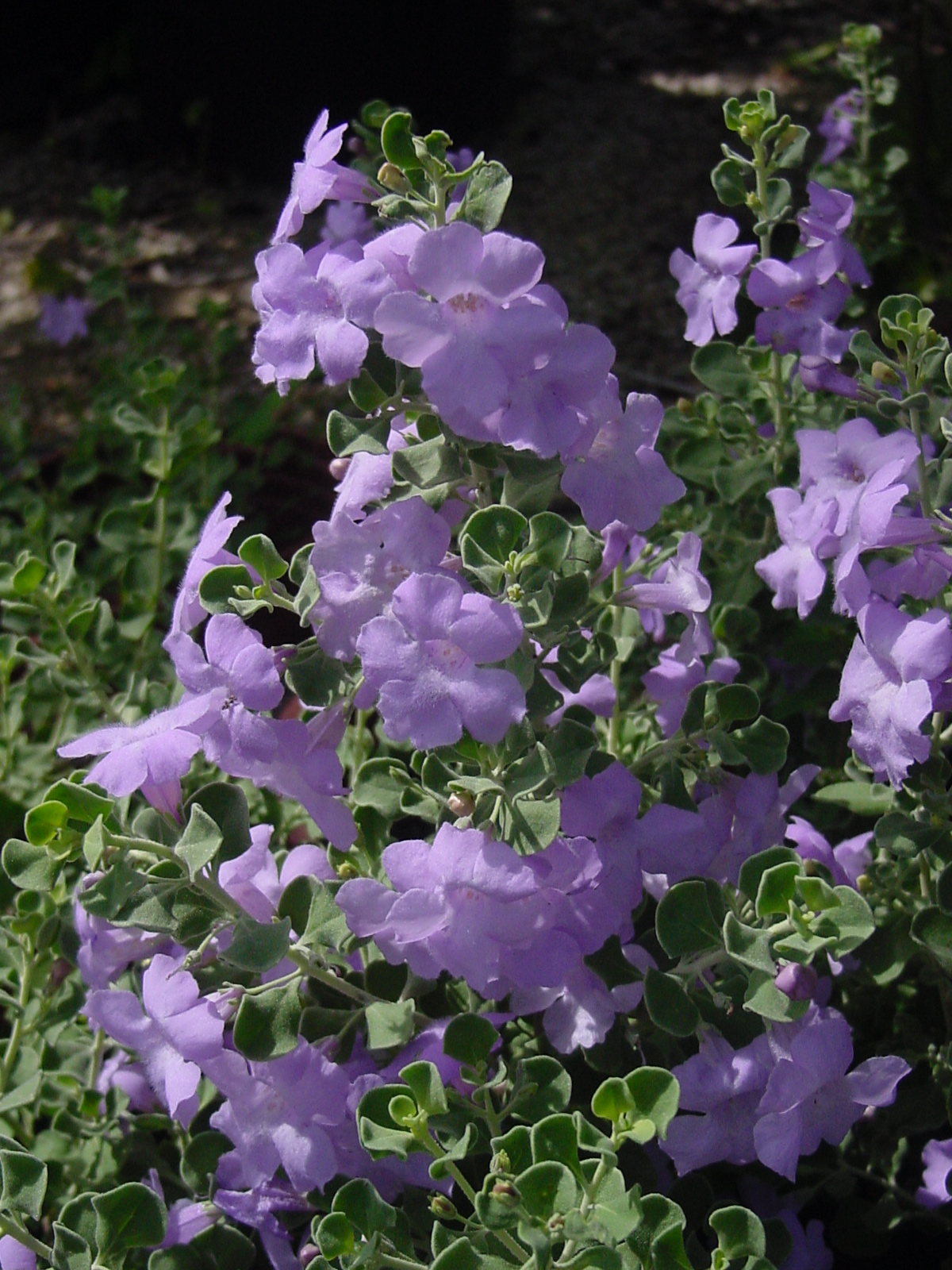
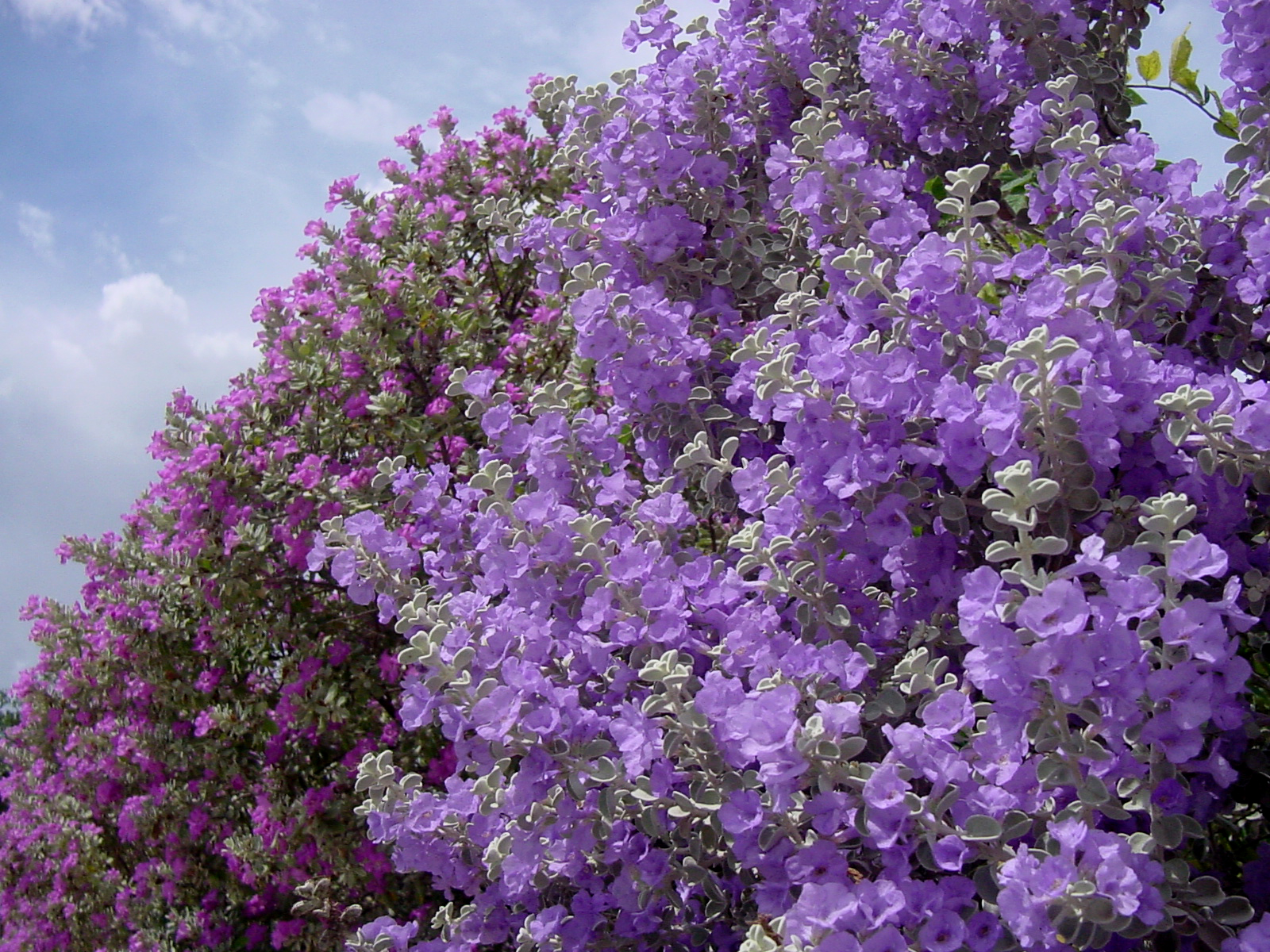
Cenizo (Texas Sage) – Lowrey’s Legacy Cenizo (Leucophyllum langmaniae)
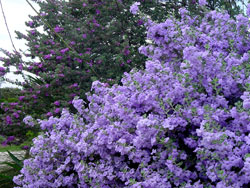
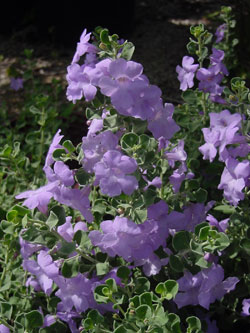
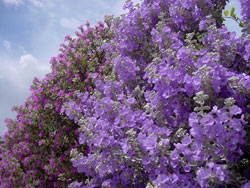
The cenizo ‘Lowery’s Legacy’ (also known as ‘Lynn’s Legacy’) was discovered in the mid ‘80 by the late great plantsman, Lynn R. Lowrey, during one of his many adventures in Mexico. It was found among a native Cenizo population off the Chipinque Park roadside outside of Monterrey, Mexico. Lowery, a legend among botanists and plant collectors, passed away in 1997. Other great plants he has been credited with introducing to the nursery trade include; Mexican sycamore, Montezuma cypress, Monterrey oak and ‘Basham’s Party Pink’ crape myrtle.
Lowrey’s Legacy is sometimes called ‘Lynn’s Ever-blooming’ Texas sage, because of the reliable and continuous profusion of flower displayed throughout much of the year. This flowering consistency is a marketable attribute for wholesalers and retailers alike. It is also a ‘compact’ plant that comfortably grows to a kept size of 4-5 feet tall and it also has a similar-width which makes for a dense, well-rounded and shapely form. The plant does not develop that ‘leggy” appearance many Texas sage/cenizo plants develop over-time. Texas sages’ green foliage provides a wonderful backdrop for its large “azalea like” lilac blue flowers, delivering some of the largest and most attractive blooms of any Texas sages on the market today. For birders, this plant is a “must’ for attracting hummingbirds. And compared to other selections of Texas sage/cenizo, this one is not as dependent on changes in relative humidity for flowering (e.g., the barometer plant); which also means it blooms more often during the course of the summer than other selections.
For home gardeners and landscaper’s throughout Texas, Lowrey’s Legacy cenizo is an easy- to- care for plant with superb drought tolerance and excellent deer resistance. It prefers full sun and requires well-drained soil. It does well even in droughty areas with a lot of reflected heat such as median areas along city streets and highways. This plant will not only save time and water, but also will provide a spectacular show of lilac blue flowers periodically throughout the year. Scientific research has demonstrated that the color blue is supposed to make a person feel good and this plant will certainly help validate that conclusion.
|