|
BUSH MORNING GLORY
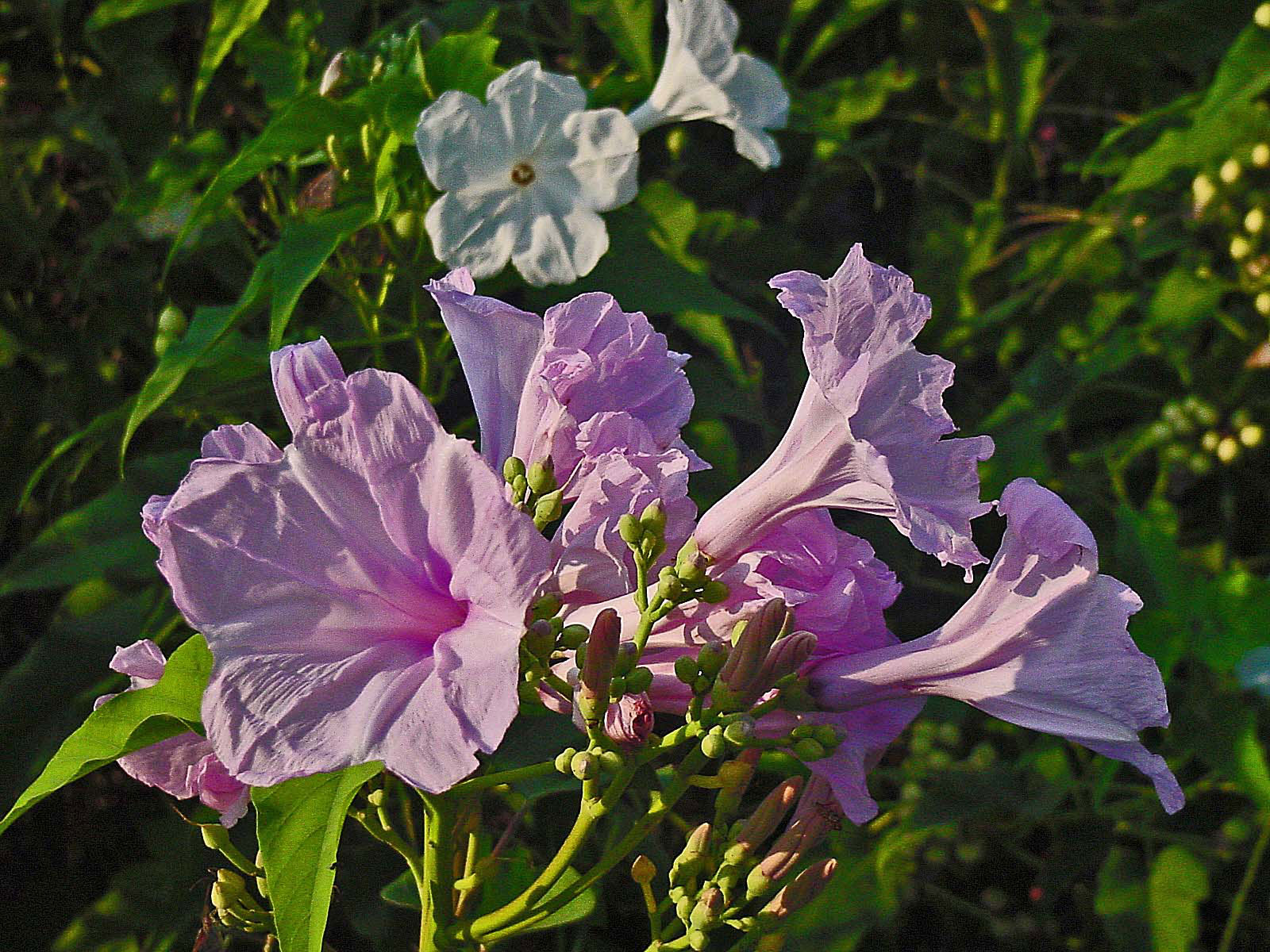
 BUSH MORNING GLORY OR MOONFLOWER, Ipomoea fistulosa Mart. ex Choisy
This interesting plant is in the sweetpotato family (Ipomoea)
with a shrub-like growth habit. The scientific name is Ipomoea fistulosa. It is described as growing in exceedingly dry places and can be considered a xeriscape plant.The bush morning glory is the most prolific bloomers of any of the summer perennials.
 The
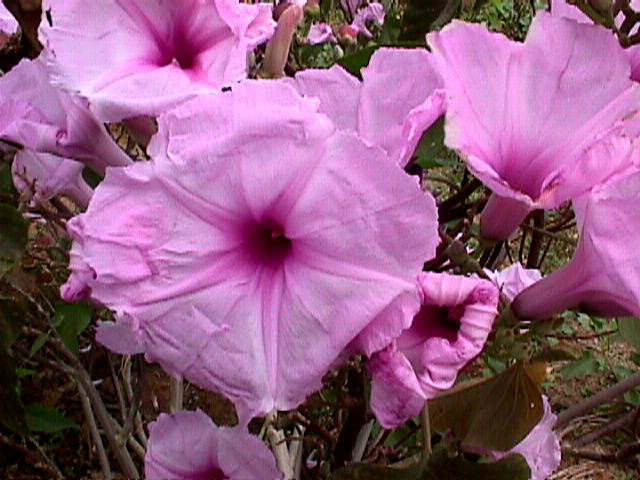
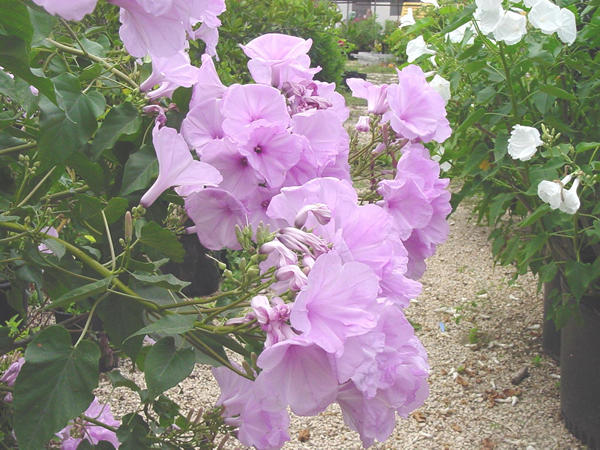
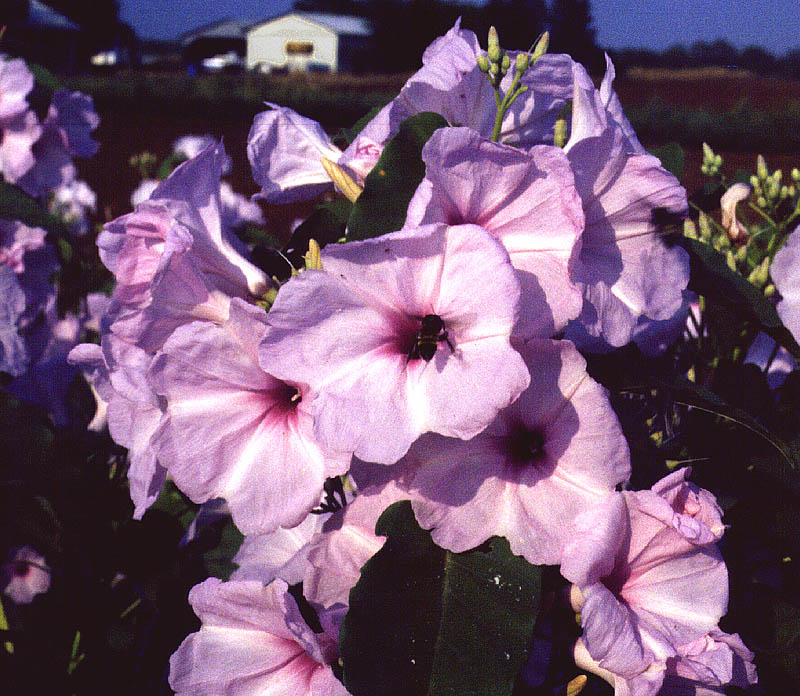
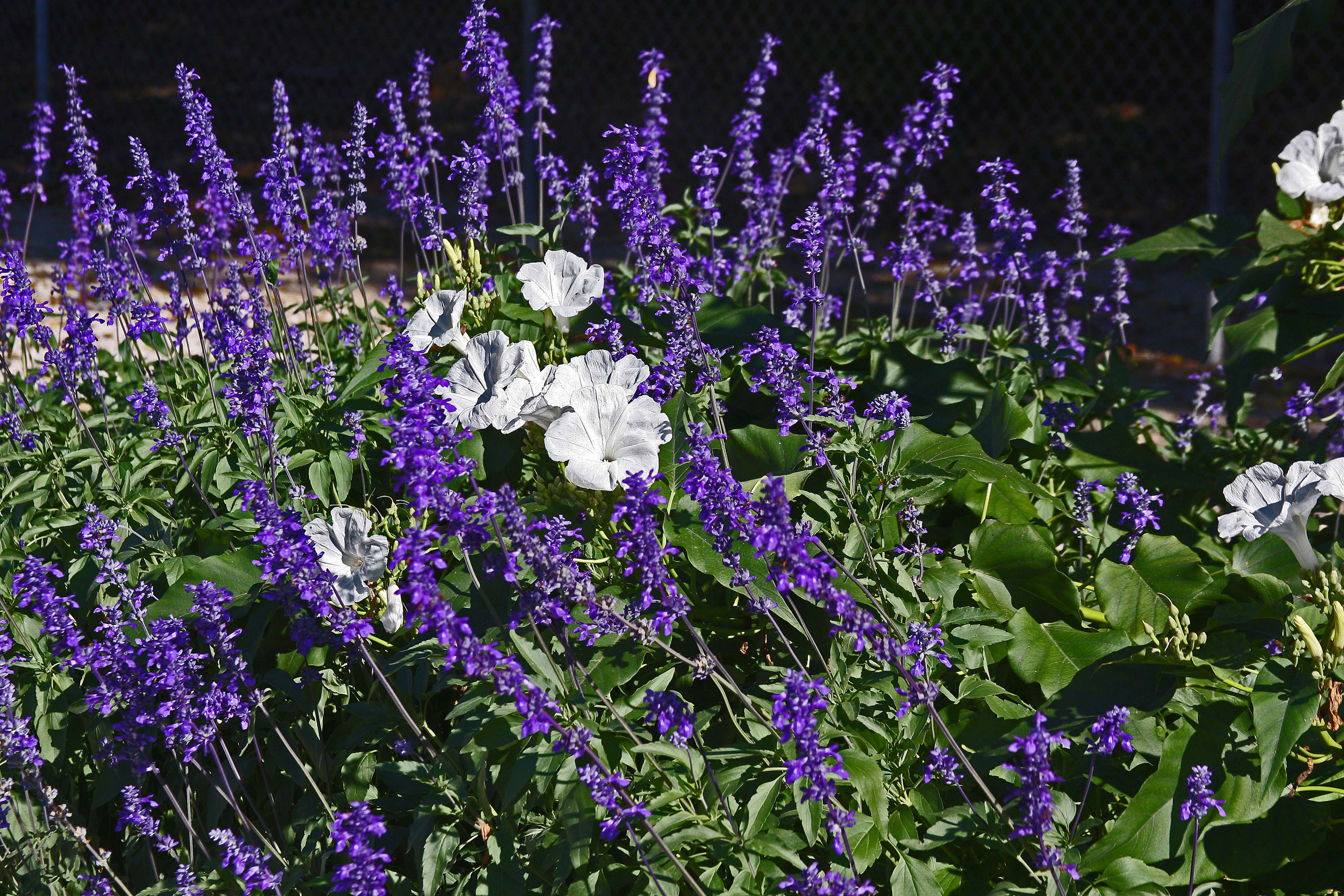
plant is covered with medium-size, light pink (there is a white
form available) blooms all summer. Blooms last only one day but
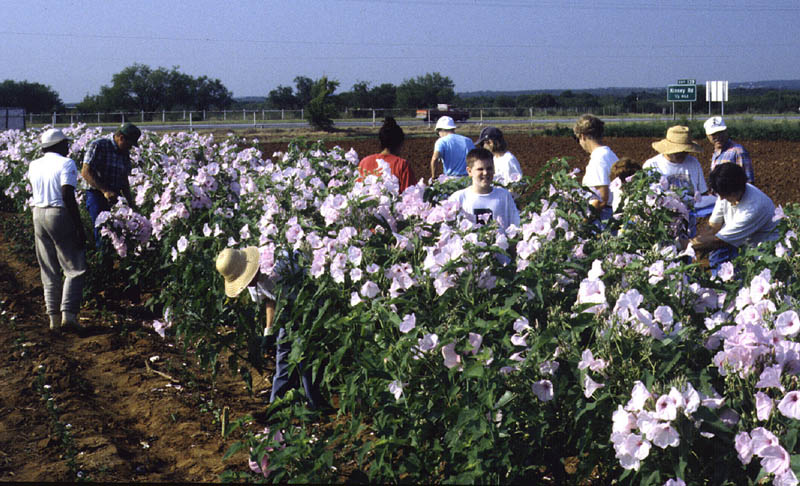
clusters of blooms are formed in the axil of every leaf. Plants
can get 6-8 feet tall with multiple trunks. When hard frosts kill
plants, the tops should be removed; in South central Texas plants
will sprout again from the hardy root system the following May.
Once established the bush morning glory is a tough (drought-tolerant
and heat-tolerant) plant. It blooms best in direct sun and will
not bloom as well if receiving less than 8-10 hours of direct
sun. Plants can be cut back monthly to encourage branching and
increase blooming surface. Cutting back in July will reduce plant
height and encourage a spectacular fall bloom. The
plant is covered with medium-size, light pink (there is a white
form available) blooms all summer. Blooms last only one day but
clusters of blooms are formed in the axil of every leaf. Plants
can get 6-8 feet tall with multiple trunks. When hard frosts kill
plants, the tops should be removed; in South central Texas plants
will sprout again from the hardy root system the following May.
Once established the bush morning glory is a tough (drought-tolerant
and heat-tolerant) plant. It blooms best in direct sun and will
not bloom as well if receiving less than 8-10 hours of direct
sun. Plants can be cut back monthly to encourage branching and
increase blooming surface. Cutting back in July will reduce plant
height and encourage a spectacular fall bloom. 
This is written about this plant in India: "It is not eaten
by livestock (ducks, goats, cattle, buffalo, elephants, etc.)
and is easily propagated by stem cuttings and withstands periods
of flooding and desiccation. It makes an ideal living fence and
is easier to manage than the common alternatives: upright cacti
succulent euphorbias or thorny species of Acacia and
Prosopis.  Under dry conditions it does not seem capable of tolerating much
competition but in water or mud it is highly competitive. Under
wet conditions the stems become inflated and may be as thick as
a human arm. These inflated stems are hard and not spongy as one
might expect. Also they are capable of rooting. In regions that
are regularly flooded Ipomoea fistulosa is often dominant
and forms stands of several hectares. " In other words, this plant
is tough and beautiful in water and in drought and, MAYBE, the
deer won't prefer it!!
Under dry conditions it does not seem capable of tolerating much
competition but in water or mud it is highly competitive. Under
wet conditions the stems become inflated and may be as thick as
a human arm. These inflated stems are hard and not spongy as one
might expect. Also they are capable of rooting. In regions that
are regularly flooded Ipomoea fistulosa is often dominant
and forms stands of several hectares. " In other words, this plant
is tough and beautiful in water and in drought and, MAYBE, the
deer won't prefer it!!
|